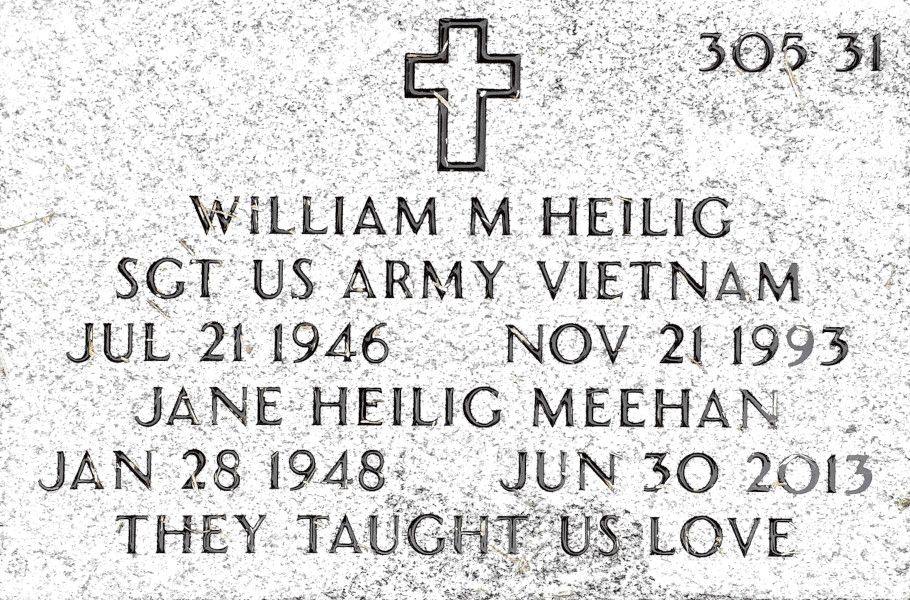
They taught us love
Posted to LinkedIn on 2026-01-11. The text below is the post as published.
“They taught us love.” These are the words that my siblings and I had engraved on our parents’ shared grave marker at Florida National Cemetery. I mentioned my father’s death in a recent post about panic disorder, because I recently learned that grief has activated some of my past anxiety attacks, including an attack at work.
I’m meant to be working on lessons about linear and logistic regression today, but the spirit says move, so I’m moving.
People bring their whole selves to the workplace, whatever boundaries and guardrails might help us compartmentalize our lives and experiences. Around 2006, when I supervised about a half dozen people in a pocket of CDC’s office of the director, one of our colleagues experienced the death of a child in their family. Not knowing how to support a work colleague, I invited a counselor from the Employee Assistance Program to talk with my whole team. Our presence and concern were the most important ways to show support: our openness to our friend, who was free to make their own choice about how to receive our support. I want to return to this theme in a future post.
The physical and emotional presence of others surrounded me as a graduate student when my father died in 1993 and again at CDC when my mother died in 2013. They each died suddenly and unexpectedly of health-related causes, so the losses were immediate and the initial grief was an exclamation point. The grief has continued since then—a series of ellipses.
Dad was a silent goofball, raised for several years at a boys’ ranch and conscripted to service in Vietnam as a young man. When I was knee-high to a grasshopper, he was informally styled a deacon. When the power company for which he worked paid for community college, he let me play with his calculator. Mom was compassionate, caring, and generous with exhortation. She graduated from high school and continued her education as an avid reader. They both grew up white in the racist South and came through aware of their privilege. My mother told us more than once how reading Black Like Me changed her life. They modeled their values, including the occasional painful episode, so that we could live a better life than they did. Imperfectly perfect, they unfailingly supported my siblings and me to do our part to make the world better. When the Florida National Cemetery gave us up to 22 characters for their shared grave marker, we settled on these 19: “They taught us love”.